

AHF Collection Buying Guide
Unstitched Suit Buying Guide Pakistan (2026)
A practical guide to choosing the right unstitched suit by fabric, number of pieces, print, embroidery, tailoring needs, season, occasion and budget.
Quick answer: how do you choose an unstitched suit?
Start with the occasion and season, then choose the fabric, decide whether you need a 2-piece or 3-piece set, compare printed versus embroidered designs, confirm what fabric pieces are included, and check measurements before sending the suit to your tailor. For online orders, also review stock status, delivery terms and return conditions before checkout.
If you are ready to browse, start with the AHF Collection shop, the Unstitched collection, or jump directly to 3 Piece Suits and 2 Piece Suits.
1. Understand what “unstitched” actually means
An unstitched suit is supplied as fabric rather than a ready-made garment. Depending on the product, the set may include shirt fabric only, shirt and trouser fabric, or a complete 3-piece combination with a dupatta. The advantage is flexibility: your tailor can adjust shirt length, neckline, sleeves, trouser shape and overall fit to your preference.
That flexibility also means the product page matters. Do not assume every 3-piece set has the same fabric lengths or composition. Check the listed pieces, fabric type and design details before ordering.
2. 2-piece vs 3-piece unstitched suits
| Type | Usually includes | Best for |
|---|---|---|
| 2-piece | Shirt + trouser, or shirt + dupatta depending on listing | Simple everyday dressing and lighter wardrobes |
| 3-piece | Shirt + trouser + dupatta | Complete coordinated outfits and more styling flexibility |
A 2-piece set is a good option when you want something lighter, simpler or easier to style with a dupatta you already own. A 3-piece suit is usually the more complete choice when you want coordinated fabric across the full outfit. Browse current 2 Piece Suits and 3 Piece Suits to compare live options.
3. Choose fabric for the weather, not only the design
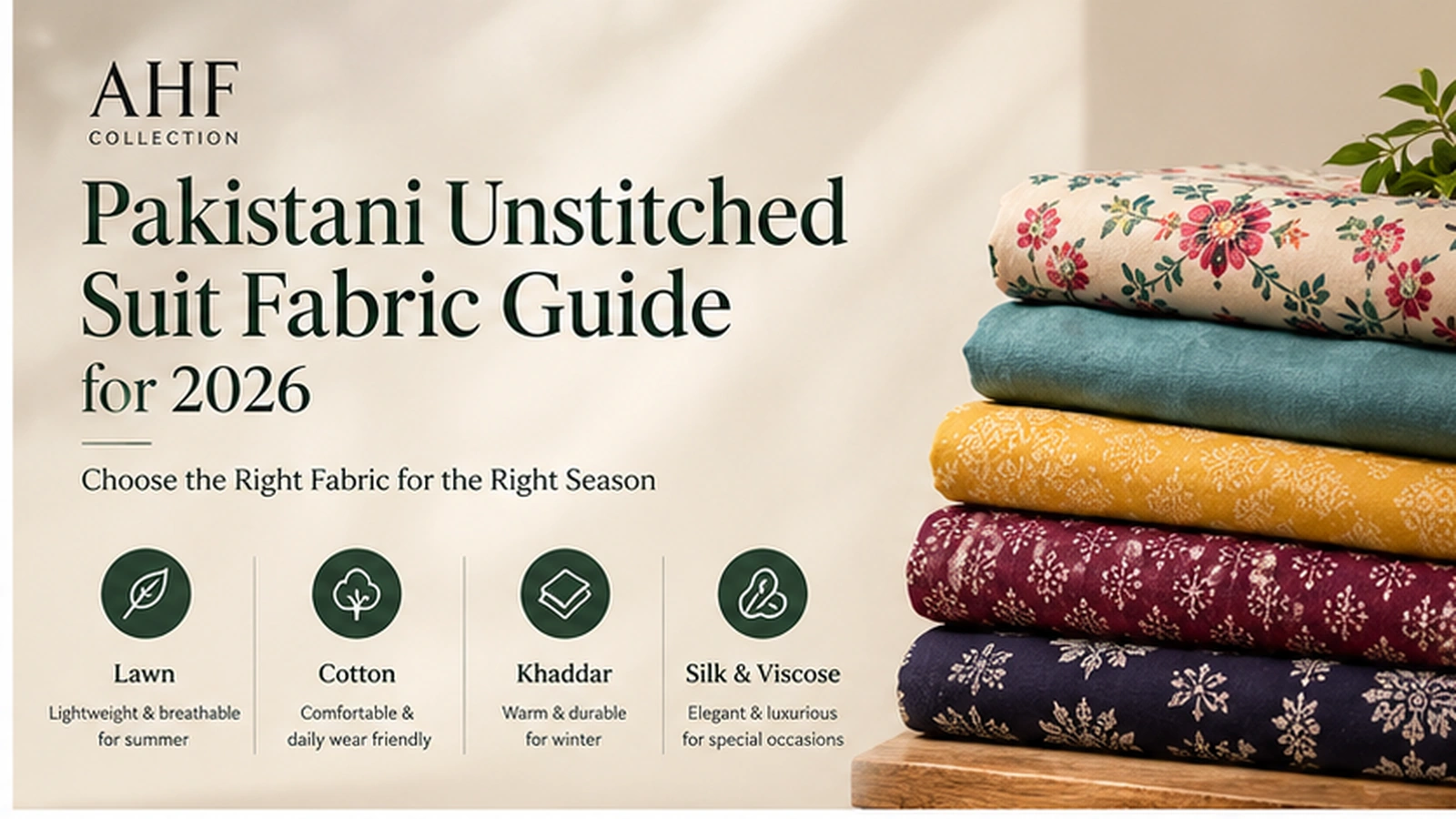
Lawn is lightweight and popular for warm weather. Cambric generally feels a little more structured and works well when you want more body in the fabric. Khaddar, linen, marina and karandi are usually more relevant to cooler weather or transitional seasons, depending on the weave and collection.
For summer, prioritize breathability and weight. For cooler months, you can accept more structure and density. If the listing gives exact fabric details, use those rather than judging only from photographs.
4. Printed vs embroidered: choose by occasion and repeat wear
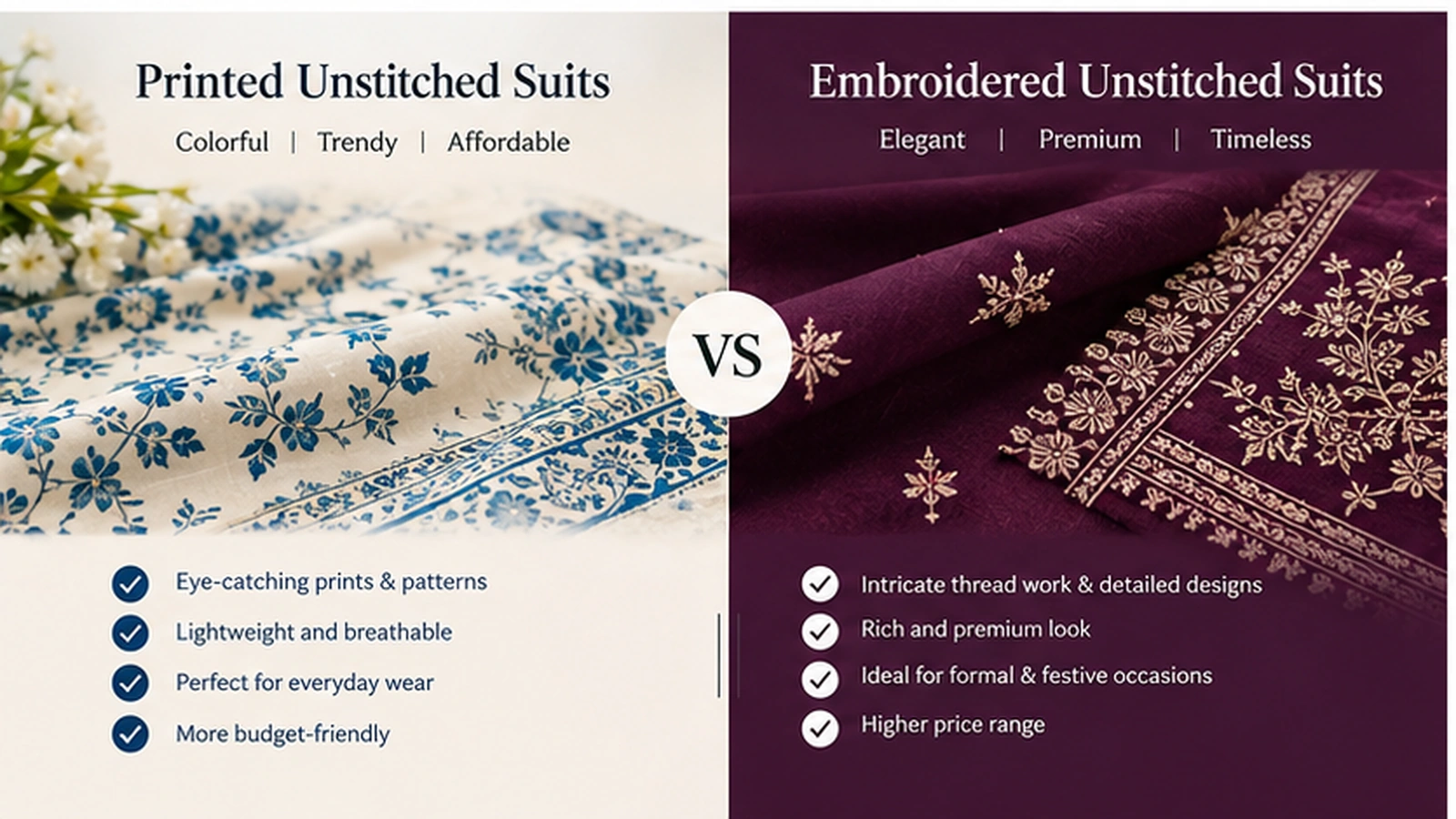
Printed suits are usually easier to repeat and style for everyday use. Embroidered suits create more visual detail and are often better suited to Eid, dinners, gatherings and semi-formal wear. If you want something dressier, compare the 3 Piece Embroidered collection.
A useful buying rule is simple: if you expect frequent use, prioritize versatility. If the outfit is for a special event, prioritize detail, finish and occasion suitability.
5. Compare brands, but evaluate the product itself
Brand pages are useful for narrowing style, but the product details should decide the purchase. AHF Collection currently carries active collections from brands including Sapphire, Safa Noor, Saya, Bareeze, Mahira, Zesh, Limelight and Alkaram.
When comparing two suits, look at fabric, included pieces, embroidery or print detail, current stock, price, color and how well the design suits your intended tailoring.
6. Check fabric measurements before tailoring
Unstitched fabric does not use ready-made size labels in the same way stitched clothing does. That means you should confirm the supplied fabric lengths and then discuss your preferred shirt length, sleeves, neckline and trouser cut with your tailor.
This is especially important when embroidery, borders or motifs need to be placed carefully. A good tailor can plan the cut before fabric is trimmed, reducing the risk of losing design details.
7. Match the suit to the occasion
- Everyday wear: lightweight prints, practical colors and simpler finishing.
- Office or polished casual: controlled prints, clean cuts and comfortable fabric.
- Eid: richer colors, embroidery and coordinated 3-piece designs. See the Eid Collection.
- Family events: embroidered or premium printed suits with stronger styling detail.
- Repeat wear: choose designs that work with shoes, jewelry and accessories you already own.
8. Use this online buying checklist
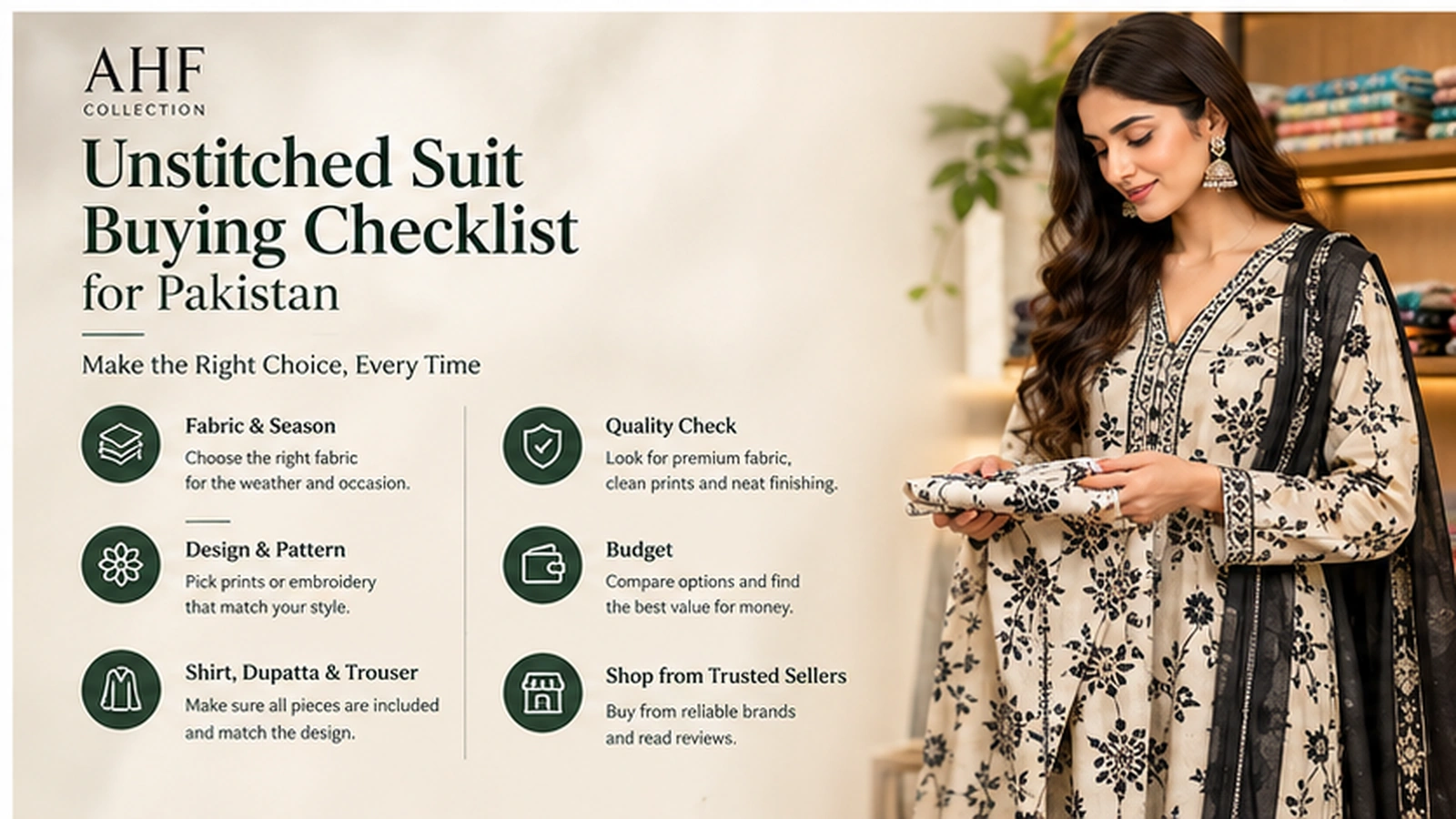
- ✓ Confirm the fabric type.
- ✓ Confirm exactly which pieces are included.
- ✓ Check whether the design is printed or embroidered.
- ✓ Review fabric lengths and tailoring requirements.
- ✓ Check live stock and current price.
- ✓ Read the shipping policy.
- ✓ Read the returns & exchanges policy.
- ✓ Ask your tailor about placement before cutting embroidered panels or borders.
9. Common buying mistakes to avoid
Buying from the first product photo
Styled photography is useful, but it should not replace the fabric description, included pieces and actual product details.
Ignoring season and comfort
A heavily detailed outfit can look impressive but still be impractical for hot weather or long wear.
Skipping tailoring planning
Embroidery, borders and motifs need placement decisions before the fabric is cut.
Buying too many occasion-only suits
A balanced wardrobe usually includes both versatile printed suits and a smaller number of dressier embroidered options.
10. Build your unstitched wardrobe as a content journey
This guide is the starting point. Continue with the supporting guides that match your next question, or browse the AHF Collection blog archive for the latest articles:
- Stitched vs Unstitched Suits in Pakistan: Which Is Better?
- Printed vs Embroidered Unstitched Suits: How to Choose
- Lawn vs Cambric vs Khaddar: Fabric Guide for Pakistan
- How to Check Fabric Measurements Before Tailoring an Unstitched Suit
- Best Unstitched Suits for Women in Pakistan in 2026
- How to Identify Quality Lawn Suits Before Buying Online
- 2 Piece vs 3 Piece Unstitched Suits in Pakistan
- How to Wash and Care for Lawn Suits in Pakistan
- How to Build a Summer Unstitched Wardrobe in Pakistan
- 7 Tailoring Ideas for Unstitched Lawn Suits
- Lawn vs Chiffon vs Voile Dupatta Guide
- How to Choose an Eid Unstitched Suit in Pakistan
- How to Buy Unstitched Suits Online in Pakistan Safely
Then use the commercial collection pages to narrow your purchase by format, embroidery level or brand. This structure moves shoppers from research to comparison to purchase while giving each page its own distinct search intent.
Frequently asked questions
Which fabric is best for unstitched suits in Pakistan?
Lawn is a strong choice for warmer weather. Cambric offers more structure, while khaddar, linen, marina and karandi are generally more relevant to cooler conditions depending on the collection.
Is a 3-piece suit better than a 2-piece suit?
Not automatically. A 3-piece is more complete and coordinated; a 2-piece can be lighter, simpler and easier to mix with items already in your wardrobe.
Are embroidered suits better for Eid?
They are often a good fit for festive occasions because they add visual detail, but a refined printed suit can also work well depending on styling and formality.
How do I know if an unstitched suit will fit me?
The final fit depends on the available fabric and your tailor. Check the product’s fabric lengths and discuss your preferred silhouette before cutting.
Where should I start if I am buying online for the first time?
Start with the Shop, choose a category that matches your needs, compare fabric and included pieces, then review shipping and return policies before checkout.
Ready to shop with a clearer plan?
Use what you learned here to compare current fabrics, brands and suit formats before ordering.